
Translating a Global Declaration into Local Action with and for Women and Girls
As the Commonwealth Games in Glasgow gets underway, there are still too many barriers to sporting activity for women, argues Justine Blomeley, CEO of Merseyside Sports Partnership (MSP)
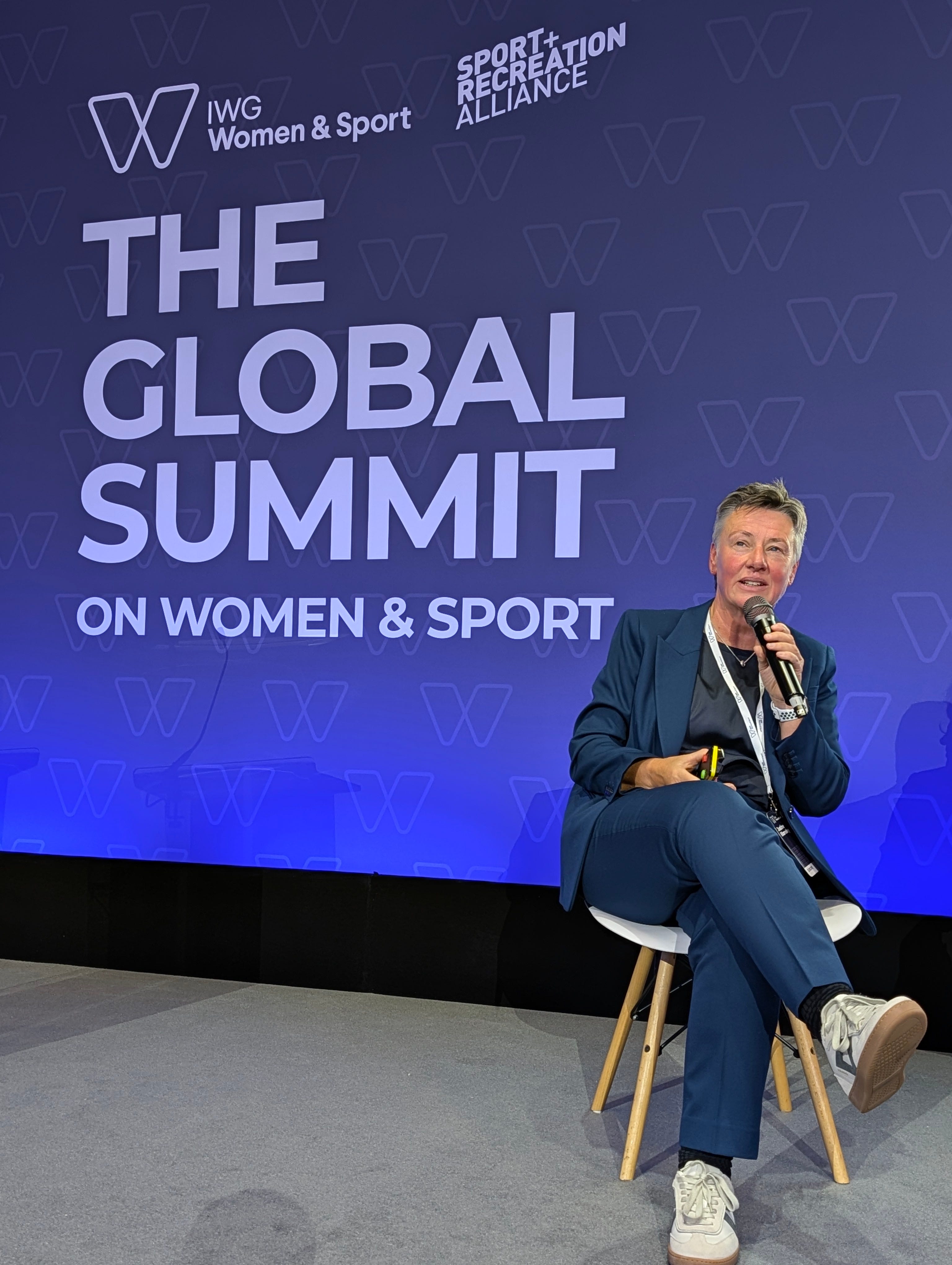
In a world where real life is unpredictable and shaped by countless interconnected factors, Liverpool City Region’s panel at the recent IWG Global Summit on Women & Sport explored why linear thinking falls short.
Instead, we discussed how a whole-systems approach helps us see the bigger picture of what truly shapes people’s lives.
Our session – on the region’s locally-led movement for gender equity in physical activity – demonstrated that making lasting change requires starting with building trust and relationships.
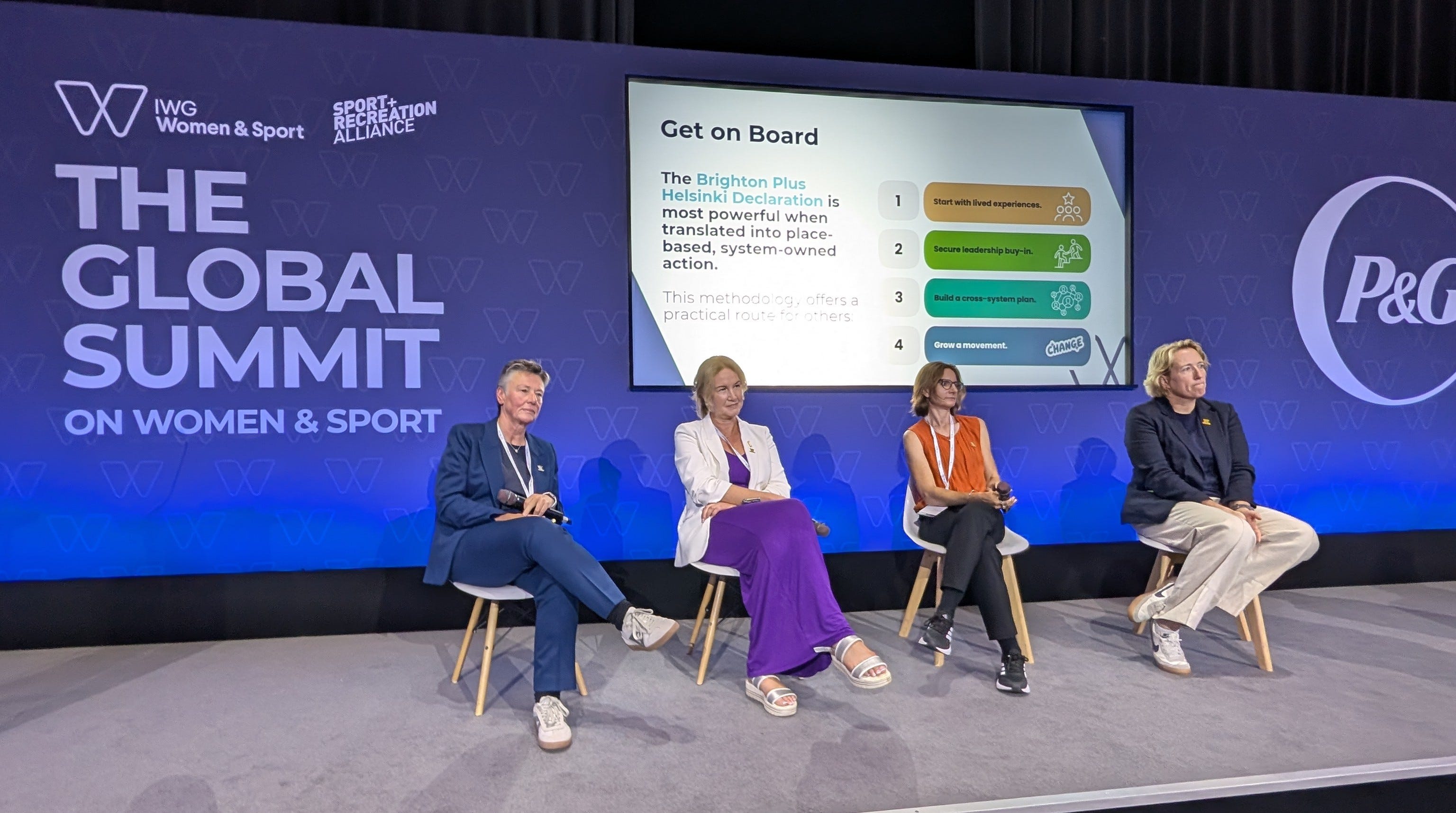
I had the privilege of sharing the stage with Kirsty McLean from the Liverpool City Region Combined Authority, Hazel Snell, High Sheriff of Merseyside, and Lisa O’Keefe MBE, Secretary General of IWG Women & Sport.
This mix of voices was highly intentional. To create a true city region-wide approach, we need international advocacy, civic leadership, and local government policy pulling in the same direction. Together, they are the puzzle pieces connecting grassroots action with top-down policy.
Confronting the Local Safety Gap
Our region boasts a phenomenal, globally recognised sporting heritage that continues to attract major international events.
However, this global spotlight makes it imperative that we look closely at our local realities. A thriving sporting culture cannot solely be about elite events; it must reflect who gets to participate safely in our local parks, gyms, and leisure centres.
Currently, according to Active Lives Survey data, only 58% of women in LCR achieve the recommended 150 minutes of weekly physical activity, compared to 62% of men – figures that drop further when intersectional inequalities are overlaid.
But the statistics that truly mandate action concern safety. Our region has previously been named the stalking capital of the UK and ranks among the worst for femicide.
Across LCR, 71% of women live in fear of sexual assault, leading many to avoid public spaces when they want to be active. Furthermore, 42% of women have experienced sexual harassment or intimidation in a leisure facility – a figure jumping to 83% for women aged 16-24.
These uncomfortable truths cannot be ignored. If physical activity systems do not challenge normalised sexism and weak reporting pathways, they reproduce the barriers they were meant to remove.
Tackling this is central to our recent achievement of Marmot City status, committing us to act on the social determinants of health. We cannot foster a healthy, equal city region if women and girls do not feel safe enough to step out their front doors.
A Blueprint for Structural Change
To change how things are done, we adopted a sister city-region approach alongside Greater Manchester. Together, we secured the signatures of both Metro Mayors on the Brighton Plus Helsinki Declaration, becoming the first place-based signatories in its 30-year history.
As discussed at the summit, this declaration provided the momentum to mobilise a collective, region-wide plan.
By exploring the socio-ecological model, we recognised that redesigning physical activity back into people’s lives meant tackling inequalities at every systemic layer. Ultimately, we share investor and philanthropist Michele Kang’s vision from Day One of the Summit: to reach a point where the only thing a girl has to do to succeed in sport is work hard. Achieving this requires collectively addressing the barriers scattered across these layers.
Devolution is the mobilising force. By aligning our goals with Mayoral pledges – such as using devolved powers to make public transport safer – we are working bottom-up and top-down simultaneously.
Growing a Movement
The declaration is only as powerful as the action it inspires. Driving this forward is our cross-system working group, bolstered by 48 pledgers from across our city regions who are committed to our shared vision.
Consequently, we are seeing the beginnings of tangible structural shifts:
In partnership with St. Helens Borough Council, MSP has appointed a dedicated Women & Girls System Change Lead.
We are partnering with the Health Equalities Group to embed active bystander education across the physical activity sector through a sustainable train-the-trainer model.
Simultaneously, the LCR Combined Authority’s Active Travel team is implementing the changes needed to enable women to travel safely to and from activities, or simply move from place to place however works best for them.
Bringing our story to the IWG Summit reinforced why local action matters within a global context.
By sharing LCR’s journey internationally, we demonstrated that a place-based approach – one connecting grassroots experiences to top-down, mayoral leadership – can serve as a practical, working blueprint for the rest of the world.